Introduction
If you enjoy helping people and want a career in healthcare, becoming an ultrasound technician can be a great choice. Many people ask, how long does it take to become an ultrasound tech before they decide to start their education. The answer depends on several things, including the type of program you choose, your previous education, and whether you study full time or part time.
An ultrasound technologist, also called a diagnostic medical sonographer, uses ultrasound imaging to help doctors find and monitor health conditions. They work closely with patients, operate advanced ultrasound equipment, and create clear images that support accurate diagnosis. Because this career combines technology with patient care, it continues to be one of the most respected roles in the healthcare industry.
Most people complete their diagnostic medical sonography education in one to four years. During that time, students learn anatomy and physiology, medical terminology, ultrasound physics, patient communication, and practical scanning skills. They also complete clinical training in real healthcare settings before applying for professional certification.
This guide explains every stage of the journey. You will learn about different education options, accredited sonography program requirements, certification, clinical experience, salary expectations, and ways to finish your education faster. Whether you are a recent high school graduate or changing careers, this article will help you plan your path with confidence.
How Long Does It Take to Become an Ultrasound Tech?
The timeline varies based on your education pathway. For most students, becoming an ultrasound tech takes between 12 months and four years. Certificate programs are the fastest option, while bachelor’s degree programs take the longest. Choosing the right pathway depends on your career goals, budget, and previous education.
Here is a simple comparison.
| Education Path | Typical Length | Best For |
| Certificate Program | 12 to 18 months | Healthcare professionals changing careers |
| Associate Degree | About 2 years | Most first-time students |
| Bachelor’s Degree | About 4 years | Students seeking advanced opportunities |
A certificate program is often available to people who already work in healthcare. These accelerated programs focus mainly on sonography skills instead of general education courses. They are one of the quickest ways to enter the profession.
An associate degree remains the most common choice. It combines classroom learning with clinical practicum, clinical rotations, and hands-on scanning practice. Many employers prefer graduates from these programs because they offer balanced education and real-world experience.
A bachelor’s degree includes additional science courses, leadership training, and broader healthcare education. Although it requires more time, it may create opportunities for future management positions, education, or specialized imaging roles.
After graduation, most employers expect candidates to earn professional certification. Preparing for and passing the certification exam can add a few extra weeks or months to your overall timeline. Even so, many graduates begin applying for jobs soon after completing their education.
What Influences Your Training Timeline?
Several factors affect how quickly you can become an ultrasound technician. Understanding these factors helps you set realistic expectations before starting school.
Your previous education is one of the biggest influences. Someone with a healthcare background may qualify for an accelerated certificate program, while a student starting from high school will usually complete an associate degree or bachelor’s degree.
The type of ultrasound school also matters. Some schools offer year-round schedules that allow students to graduate sooner. Others follow traditional academic calendars with longer breaks.
Your study schedule makes a difference as well. Full-time students generally complete programs faster than part-time students. Many adults balance school with work and family responsibilities, which can extend their education timeline.
Another important factor is completing prerequisite courses. Some schools require biology, algebra, anatomy, or medical terminology before admission. Finishing these classes may add several months if you have not already completed them.
The availability of clinical internship placements can also affect graduation dates. Every student must gain supervised experience in hospitals, clinics, or imaging centers. If placements are limited, students may need to wait for an opening.
Finally, preparing for professional certification and completing application requirements can slightly extend the process. Good planning helps avoid unnecessary delays.
Compare Every Education Pathway
There is no single route into medical sonography. Each pathway has different benefits depending on your experience and career goals.
An associate degree is the most popular option because it offers a strong balance between time, cost, and career opportunities. Students complete classroom instruction, laboratory practice, and clinical training while learning the science behind diagnostic imaging.
A bachelor’s degree provides a broader education. Students study advanced healthcare topics, research methods, and leadership skills alongside sonography courses. Although this pathway takes longer, graduates may qualify for additional responsibilities later in their careers.
A certificate program is designed mainly for individuals who already have education in another healthcare profession. Since these students already understand patient care and healthcare systems, certificate programs focus almost entirely on ultrasound-specific skills.
No matter which option you choose, employers usually prefer graduates from an accredited sonography program because accreditation shows that the education meets professional standards.
Before enrolling, compare tuition, graduation rates, certification success rates, and available clinical experience opportunities. These factors can influence both your education quality and your future career.
Certificate vs Degree Programs Explained
Choosing between a certificate and a degree program depends on your background and long-term goals.
A certificate program is usually the fastest route. These programs often last 12 to 18 months and emphasize practical scanning skills, diagnostic procedures, patient communication, and operation of ultrasound equipment. They work best for students who already have healthcare education.
An associate degree generally takes about two years. Students complete both general education subjects and specialized sonography courses. The curriculum usually includes anatomy, physiology, ultrasound physics, medical terminology, patient care, and supervised scanning practice.
A bachelor’s degree usually requires four years. Besides technical sonography training, students study healthcare management, communication, research, and advanced imaging concepts. Some employers value this broader education for future leadership roles.
Although certificate programs are shorter, they may not be available to everyone. Many schools require applicants to already hold a healthcare credential before admission.
If your goal is simply entering the workforce quickly, an associate degree often provides the best balance between education length, affordability, and employment opportunities.
Choose an Accredited Sonography School
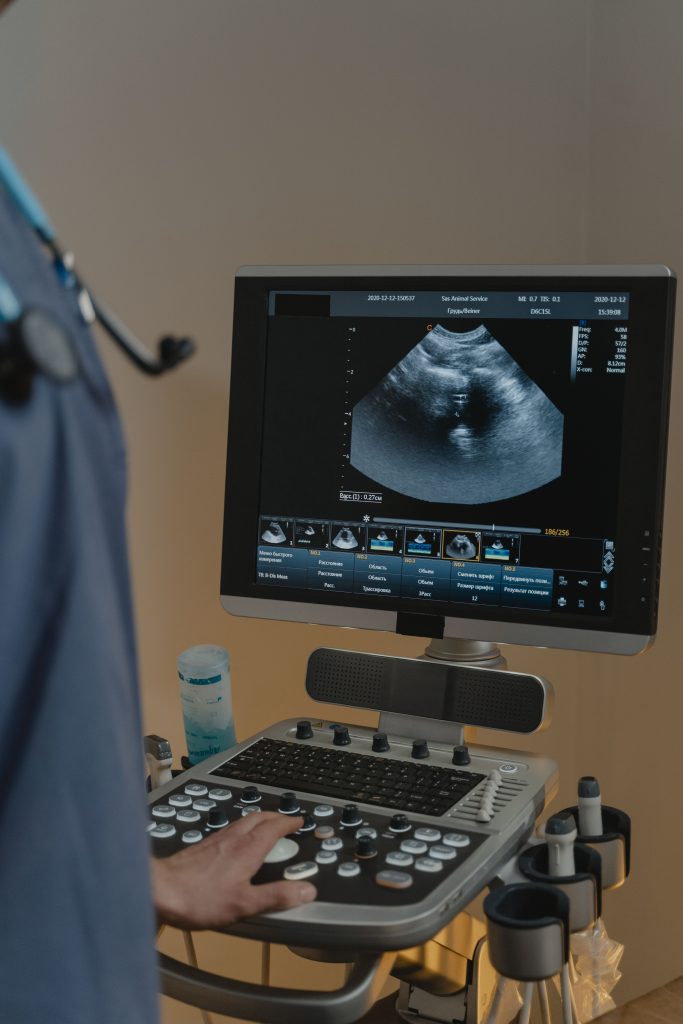
Choosing the right school is one of the most important decisions you will make. A high-quality program can improve your learning experience and help you qualify for professional certification more easily.
Look for an accredited sonography program that meets recognized educational standards. Accreditation shows that the school teaches the knowledge and practical skills expected by employers. It also helps prepare students for national certification exams.
Many respected schools receive accreditation through organizations connected with Diagnostic Medical Sonography education. Employers often prefer graduates from accredited programs because they trust the quality of the curriculum and training.
A strong curriculum should include classroom instruction, laboratory practice, hands-on learning, professional practice, and extensive clinical practicum experiences. Students should also learn diagnostic procedures, patient safety, communication skills, and ethical responsibilities.
Ask each school where students complete their clinical internship. High-quality programs often partner with hospitals, healthcare facilities, physician offices, outpatient centers, and specialized imaging centers. These partnerships allow students to gain valuable real-world experience while working with experienced sonographers.
Also compare graduation rates, certification pass rates, class sizes, tuition costs, and financial aid options. A slightly more expensive program may provide stronger job placement support after graduation.
Finally, think about your career interests before choosing a school. Some programs offer additional experience in abdominal sonography, obstetric ultrasound, vascular ultrasound, obstetrics, gynecology, and other specialty areas. Exposure to multiple specialties during training can make you a more competitive job candidate after graduation.
Prerequisites Before You Can Enroll
Before you can begin a sonography program, you must meet the school’s admission requirements. These requirements vary, but most programs expect students to have a high school diploma or an equivalent qualification. Some colleges are competitive, so meeting the minimum requirements does not always guarantee admission.
Many schools also require prerequisite courses before students can enroll. These classes often include biology, anatomy, physiology, college algebra, English, and medical terminology. Completing these courses helps students understand the science behind diagnostic medical sonography and prepares them for more advanced lessons.
Some schools ask applicants to complete healthcare observation hours, submit recommendation letters, or pass an entrance interview. Others may require CPR certification or proof of vaccinations before students begin their clinical training.
If you already have experience in healthcare, you may qualify for an accelerated certificate program. Previous education as a nurse, radiologic technologist, or another allied health professional can shorten your overall education timeline because many general healthcare subjects have already been completed.
Planning ahead is important. Completing prerequisites before applying can help you start your program sooner and avoid delays in graduation.
What You Learn During Training
A quality ultrasound technology program teaches much more than how to operate a scanner. Students learn the science, technical skills, and communication abilities needed to provide safe and accurate patient care.
One of the first subjects is anatomy and physiology. Students study every major body system so they can recognize normal organs and identify unusual findings during an ultrasound exam.
Another important subject is ultrasound physics. This explains how sound waves create medical images and how different machine settings affect image quality. Understanding physics helps sonographers produce clear images while keeping patients safe.
Students also learn sonography principles, diagnostic procedures, infection control, ethics, patient positioning, and professional communication. Because ultrasound exams involve direct patient interaction, excellent communication skills are just as important as technical ability.
During laboratory sessions, students practice using imaging equipment and modern ultrasound equipment before working with real patients. These practice sessions build confidence and improve scanning accuracy.
As the program continues, students study different imaging specialties, including abdominal sonography, obstetric ultrasound, vascular ultrasound, and other areas of diagnostic imaging. Learning multiple specialties makes graduates more valuable in today’s healthcare industry.
Clinical Hours and Hands-On Experience
Classroom learning alone is not enough to become a successful ultrasound technologist. Every accredited program includes supervised clinical experience, where students apply their knowledge in real healthcare settings.
Students complete hundreds of hours in clinical practicum, clinical rotations, or a clinical internship under experienced professionals. During this time, they learn how to communicate with patients, prepare examination rooms, operate ultrasound systems, and document findings accurately.
Clinical placements often take place in hospitals, clinics, physician offices, outpatient centers, imaging centers, and other healthcare facilities. Working in different environments allows students to experience a wide variety of patients and medical conditions.
Students gradually perform more complex examinations as their skills improve. At first, they observe experienced sonographers. Later, they complete scans while instructors supervise and provide feedback.
This hands-on learning is one of the most valuable parts of the program. Employers want graduates who can confidently perform exams while maintaining patient comfort and safety.
The number of required clinical hours depends on the school and accreditation standards. Completing all required hours is necessary before graduation and before becoming eligible for most certification exams.
Certification Steps After Graduation
Graduating from an accredited sonography program is only one step. Most employers also expect candidates to earn professional certification before beginning full-time work.
The most widely recognized credential comes from the American Registry for Diagnostic Medical Sonography (ARDMS). Many employers list ARDMS certification as a preferred or required qualification because it demonstrates professional competence.
To become certified, graduates usually meet education requirements, complete their clinical experience, and pass a certification exam. Students often spend several weeks reviewing ultrasound physics, anatomy, patient care, and scanning procedures before taking the exam.
Some professionals also pursue additional credentials through organizations such as ARRT or CCI, depending on their career goals and specialty. Comparing ARDMS vs ARRT vs CCI certifications can help students choose the credential that best fits their future plans.
After becoming certified, many sonographers continue their education through continuing education courses. This helps them maintain certification, learn new imaging techniques, and stay current with advances in healthcare technology.
Professional certification not only improves employment opportunities but also increases employer confidence in your skills and knowledge.
State Requirements and Licensing Differences
Unlike some healthcare professions, there is no nationwide licensing system for ultrasound technicians. State requirements vary, and many states do not require a separate license.
Even when licensing is not required, employers frequently expect applicants to hold professional certification through organizations such as the American Registry for Diagnostic Medical Sonography (ARDMS). This certification serves as proof that a sonographer has completed approved education and demonstrated the skills needed for patient care.
Some states or employers may have additional hiring requirements, including background checks, CPR certification, or continuing education. Always research local regulations before choosing a school or accepting a job offer.
If you plan to work in Texas, for example, it is helpful to understand employer expectations even though statewide licensing requirements may differ from other healthcare professions. Looking into state requirements before graduation can save time later.
Students who may move after graduation should also check whether their new state has different certification expectations. Preparing early makes relocation much easier.
Fastest Route to Becoming an Ultrasound Tech

Many people want to enter the workforce as quickly as possible. Fortunately, there are several ways to reduce your overall education timeline without sacrificing quality.
The fastest option is usually a certificate program designed for people with previous healthcare education. These programs often take only 12 to 18 months because students have already completed many general healthcare courses.
If you are starting from the beginning, enrolling in a full-time associate degree program is often the quickest path. Taking summer classes when available can also help shorten graduation time.
Completing all prerequisite courses before applying prevents unnecessary delays. Some students lose several months simply because they must finish required science courses before beginning sonography classes.
Strong study habits also make a difference. Staying organized, attending every laboratory session, and preparing early for certification exams can help you move smoothly from graduation into employment.
Choosing a school with reliable clinical internship placements is another smart strategy. Programs with established hospital partnerships usually avoid delays caused by limited clinical availability.
Can Online Sonography Programs Save Time?
Online education has become more popular, but many students wonder whether they can complete a sonography program entirely from home.
The answer is no. While some classroom subjects can be completed online, ultrasound is a hands-on profession. Students must practice scanning techniques using real equipment under professional supervision.
Many schools now offer hybrid programs. In these programs, lectures, assignments, and some exams take place online, while laboratory practice and clinical training occur in person.
Hybrid learning offers flexibility for students with jobs or family responsibilities. It can reduce travel time and make scheduling easier without compromising education quality.
However, online learning does not shorten the required clinical practicum or clinical experience. Every student must complete supervised patient examinations before graduating.
When comparing schools, make sure the online program is still an accredited sonography program. Accreditation remains just as important for hybrid programs as it is for traditional classroom education.
Career Specialties and Training Length
Not every diagnostic medical sonographer performs the same type of work. Many professionals specialize in specific areas of healthcare after completing their basic education.
Some focus on obstetric ultrasound, helping monitor pregnancies and fetal development. Others specialize in abdominal sonography, examining organs such as the liver, kidneys, pancreas, and gallbladder.
Another growing specialty is vascular ultrasound, which evaluates blood vessels and blood flow. Some professionals continue into cardiac sonography, breast imaging, pediatric imaging, or musculoskeletal ultrasound through additional training and certification.
Specializing may require extra study time after graduation, but it can also increase career opportunities and earning potential.
Learning multiple specialties during school gives graduates greater flexibility when applying for jobs. Many employers value sonographers who can perform a variety of examinations across different departments.
Tuition Costs and Financial Aid Options
The cost of becoming an ultrasound technician varies depending on the school, program length, and location. Community colleges generally offer lower tuition than private colleges, while bachelor’s degree programs are usually the most expensive.
Besides tuition, students should budget for textbooks, uniforms, laboratory fees, insurance, transportation to clinical sites, certification exams, and graduation expenses.
Many schools offer financial assistance to qualified students. Grants, scholarships, employer tuition assistance, work-study programs, and student loans can reduce the financial burden.
Comparing total education costs instead of tuition alone is important. A slightly more expensive school may provide stronger job placement services, better clinical training, and higher certification pass rates.
Graduates often recover their educational investment over time because employment opportunities for qualified sonographers remain strong in many healthcare settings.
Salary Expectations After Certification
One reason many people choose this career is its attractive earning potential. Salary depends on education, certification, experience, location, specialty, and employer.
New graduates usually begin with entry-level salaries, but income often increases after gaining experience and earning specialty certifications.
Professionals working in large hospitals or specialized diagnostic imaging departments may earn more than those employed in smaller clinics. Geographic location also plays a major role, with some states offering significantly higher wages than others.
Sonographers who develop expertise in advanced specialties or leadership positions may enjoy even greater earning potential throughout their careers.
Although salary should never be the only reason for choosing a profession, the combination of stable income, meaningful patient care, and career growth makes ultrasound technology an appealing healthcare career.
Job Outlook and Career Growth
The future for diagnostic medical sonography remains very positive. Healthcare providers continue to rely on ultrasound because it is safe, effective, and does not use ionizing radiation like some other imaging methods.
An aging population, improved medical technology, and growing demand for early diagnosis continue to increase the need for qualified sonographers. As a result, the job outlook for trained professionals remains strong.
Graduates can work in healthcare facilities, hospitals, physician offices, outpatient imaging centers, specialty clinics, and mobile diagnostic services. Some eventually move into education, management, equipment sales, or clinical supervision.
Career growth also comes through specialty certifications, advanced education, and continuing education. Expanding your skills allows you to qualify for higher-paying positions and more specialized responsibilities.
Choosing a respected ultrasound school, completing your education successfully, earning certification, and continuing to improve your skills can lead to a rewarding healthcare career with long-term stability.
Ultrasound Tech vs Other Imaging Careers
If you are interested in medical imaging, you may also consider careers such as an MRI technologist, CT technologist, or X-ray technologist. While these professions all help doctors diagnose health conditions, their daily work and education requirements are different.
An ultrasound technician, also called an ultrasound technologist or diagnostic medical sonographer, uses sound waves to create images of organs, tissues, blood vessels, and developing babies. Unlike X-rays or CT scans, ultrasound does not use radiation, making it a preferred imaging method for many situations.
Radiologic technologists work with X-ray machines and often continue into CT or MRI after earning additional certifications. MRI technologists use magnetic fields and radio waves to create detailed images, while CT technologists operate computed tomography scanners that provide cross-sectional images of the body.
The education timeline also varies. Most ultrasound professionals complete an associate degree or certificate program, while MRI and CT technologists often begin as radiologic technologists before completing advanced training. This means the overall career path can sometimes take longer.
Choosing between these careers depends on your interests. If you enjoy working closely with patients, solving medical puzzles, and using advanced imaging technology without radiation exposure, diagnostic medical sonography can be an excellent choice.
| Career | Typical Education | Imaging Method | Uses Radiation |
| Ultrasound Tech | Certificate Program, Associate Degree, Bachelor’s Degree | Sound Waves | No |
| X-ray Technologist | Associate Degree | X-rays | Yes |
| CT Technologist | Additional CT Training | Computed Tomography | Yes |
| MRI Technologist | MRI Training | Magnetic Fields | No |
Common Mistakes That Delay Graduation
Many students begin their education with excitement but unknowingly make decisions that slow their progress. Understanding these common mistakes can help you graduate on time.
One of the biggest mistakes is waiting too long to complete prerequisite courses. Since many schools require science and math classes before admission, delaying these requirements can postpone enrollment by several months.
Another mistake is choosing a school without proper accreditation. Graduating from a program that is not an accredited sonography program may create problems when applying for certification or employment.
Some students underestimate the importance of attendance. Missing laboratory sessions or clinical rotations can delay graduation because these activities are required for program completion.
Poor time management is another challenge. Balancing classes, assignments, exams, and clinical internship responsibilities requires careful planning. Creating a weekly study schedule helps students stay on track.
Many students also wait until the last minute to prepare for the certification exam. Starting exam preparation early improves confidence and increases the chance of passing on the first attempt.
Finally, some students focus only on grades while ignoring communication skills and professionalism. Employers value teamwork, patient care, and reliability just as much as technical knowledge.
Tips to Finish Training Faster
Although every student must complete required education and clinical experience, there are practical ways to shorten your overall journey.
Research schools carefully before applying. Choose programs with strong graduation rates, organized schedules, and established partnerships with hospitals, clinics, and imaging centers. Reliable clinical practicum placements reduce the risk of unexpected delays.
Complete every required document before your application deadline. Missing transcripts, health records, or background check paperwork can postpone admission.
If possible, study full time instead of part time. Full-time students usually complete the curriculum much sooner and remain focused throughout the program.
Use school resources whenever you need help. Tutors, instructors, study groups, and academic advisors can help you overcome difficult subjects like ultrasound physics, anatomy and physiology, or medical terminology.
Practice scanning skills whenever laboratory time is available. More practice improves confidence and helps students perform better during hands-on learning and clinical training.
Finally, begin reviewing for ARDMS certification well before graduation. Passing the examination soon after finishing school allows you to start applying for jobs without unnecessary waiting.
Your Step-by-Step Career Roadmap
Becoming an ultrasound technician is easier when you follow a clear plan. The journey may seem long at first, but breaking it into simple steps makes the process manageable.
Step 1: Earn a high school diploma or equivalent and build a strong foundation in science and mathematics.
Step 2: Complete all required prerequisite courses, including biology, anatomy, physiology, and other admission requirements.
Step 3: Enroll in an accredited sonography program that matches your career goals. Compare a certificate program, associate degree, and bachelor’s degree before making your decision.
Step 4: Study the classroom curriculum, including ultrasound physics, sonography principles, patient communication, diagnostic procedures, ethics, and professional practice.
Step 5: Complete your required clinical training, clinical practicum, and clinical experience in healthcare facilities such as hospitals, physician offices, outpatient centers, and imaging centers.
Step 6: Graduate and apply for professional certification through the American Registry for Diagnostic Medical Sonography (ARDMS) or another recognized organization that matches your career goals.
Step 7: Pass your certification exam, prepare a professional resume, and begin your job search. Explore employment opportunities in hospitals, specialty clinics, diagnostic imaging centers, and private medical practices.
Step 8: Continue learning through continuing education, gain experience, and pursue specialty certifications in areas such as obstetric ultrasound, abdominal sonography, or vascular ultrasound to expand your career options.
Following this roadmap helps you move from student to professional with confidence while building a long and rewarding healthcare career.
Conclusion
So, how long does it take to become an ultrasound tech? For most people, the answer is between one and four years. The exact timeline depends on the education pathway you choose, your previous experience, whether you study full time, and how quickly you complete your certification.
An associate degree remains the most popular option because it offers a good balance of time, cost, and career opportunities. A certificate program is often the fastest route for healthcare professionals, while a bachelor’s degree provides broader education and future leadership opportunities.
Success in this field requires much more than completing classes. You must build strong technical skills, gain valuable clinical experience, communicate well with patients, and stay committed to lifelong learning through continuing education.
With careful planning, the right school, and dedication, you can become a skilled diagnostic medical sonographer and enjoy a stable, meaningful career that makes a real difference in people’s lives.
FAQs
How long does it take to become an ultrasound tech after high school?
Most students need about two years by completing an associate degree. A bachelor’s degree usually takes four years, while some healthcare professionals may qualify for a shorter certificate program.
What is the fastest way to become an ultrasound technician?
The fastest route is usually an accredited certificate program designed for students who already have education or experience in healthcare.
Do I need certification to work as an ultrasound tech?
Many employers prefer or require certification through the American Registry for Diagnostic Medical Sonography (ARDMS), even if state licensing is not required.
Can I study ultrasound technology online?
Some schools offer hybrid programs where classroom instruction is online, but all students must complete in-person laboratory work and supervised clinical training.
Is becoming an ultrasound technician difficult?
The program is challenging because students study science, patient care, and scanning techniques. With consistent effort and practice, most motivated students successfully complete the program.
Which specialization pays the most?
Pay varies by employer and location, but advanced specialties such as vascular, cardiac, and other high-demand imaging fields often offer higher salaries.
What GPA do most sonography programs require?
Requirements differ by school, but many programs expect applicants to maintain a solid academic record, especially in science courses.
Can I work while attending ultrasound school?
Yes. Many students work part time, although full-time study often allows faster graduation because clinical rotations require a significant time commitment.
Is sonography harder than nursing?
Both careers are challenging in different ways. Sonography focuses more on imaging technology and scanning skills, while nursing involves a broader range of patient care responsibilities.
What skills make a successful ultrasound technologist?
Successful professionals combine technical knowledge with strong communication, attention to detail, compassion, problem-solving, and the ability to provide excellent patient care in busy healthcare environments.
1. How Long Does It Take to Become an Ultrasound Tech: Complete Education Timeline and Career Roadmap
Meta Description: Learn How Long Does It Take to Become an Ultrasound Tech with this complete guide covering education paths, certification, clinical training, and career tips.
2. How Long Does It Take to Become an Ultrasound Tech: Certificate, Degree, and Training Compared
Meta Description: Discover How Long Does It Take to Become an Ultrasound Tech by comparing certificate, associate, and bachelor’s programs, plus certification requirements.
3. How Long Does It Take to Become an Ultrasound Tech: Step-by-Step Guide From School to Career
Meta Description: Find out How Long Does It Take to Become an Ultrasound Tech with a step-by-step guide covering school, clinical experience, certification, and jobs.
4. How Long Does It Take to Become an Ultrasound Tech: Fastest Path, Costs, and Salary Guide
Meta Description: Explore How Long Does It Take to Become an Ultrasound Tech, including the fastest education path, tuition costs, certification, salary, and career outlook.
5. How Long Does It Take to Become an Ultrasound Tech: Everything You Need to Know Before Enrolling
Meta Description: Understand How Long Does It Take to Become an Ultrasound Tech with expert insights on program length, accreditation, certification, and career opportunities.