Construction projects depend on careful planning, reliable machinery, and the ability to respond to changing site conditions. While schedules and budgets are often established before work begins, actual ground conditions can introduce challenges that affect productivity and progress. Drilling is one area where the right equipment can make a significant difference, helping contractors complete essential groundwork with greater control and consistency. Selecting suitable machinery is therefore not simply about choosing a powerful drill. It involves understanding the soil and rock formation, required drilling depth, accessibility, project objectives, and expected workload. A suitable rig company can help contractors evaluate these factors and identify equipment that fits the practical requirements of the site.
Why Equipment Selection Matters in Construction
Drilling equipment plays an important role in activities such as foundation preparation, water well development, geotechnical investigation, anchoring, mining-related work, and other construction applications. Each project can present different ground conditions and operational requirements. A machine that performs effectively on one site may not deliver the same results on another.
The correct equipment helps create a better balance between drilling performance, mobility, fuel consumption, maintenance requirements, and overall operating costs. Contractors can also reduce unnecessary interruptions when the selected rig is compatible with the drilling method and site environment.
Assessing Ground Conditions Before Drilling
Ground conditions are among the most important considerations when selecting drilling equipment. Soil, clay, gravel, weathered rock, and hard rock can each respond differently to drilling methods. Unexpected changes in geological formations can also occur as drilling progresses deeper into the ground. Rotary drilling systems use continuous rotation to cut or penetrate the formation, while percussion systems rely on repeated impact to break harder materials. Rotary-percussion configurations can combine these approaches when project conditions require both rotational and impact energy. Understanding the formation helps contractors choose suitable bits, hammers, drill pipes, and other components.
Matching Machine Capacity to Project Requirements
Machine capacity should correspond with the depth, diameter, and type of drilling required. Choosing equipment with insufficient capacity can slow operations and place additional stress on components. At the same time, using a machine significantly larger than necessary may increase transportation, fuel, and setup costs without providing a practical advantage.
Contractors should consider maximum drilling depth, available power, feed force, rotation capability, compressor requirements, and tooling compatibility. These specifications should be evaluated alongside the expected workload rather than considered independently.
Mobility Can Improve Site Productivity
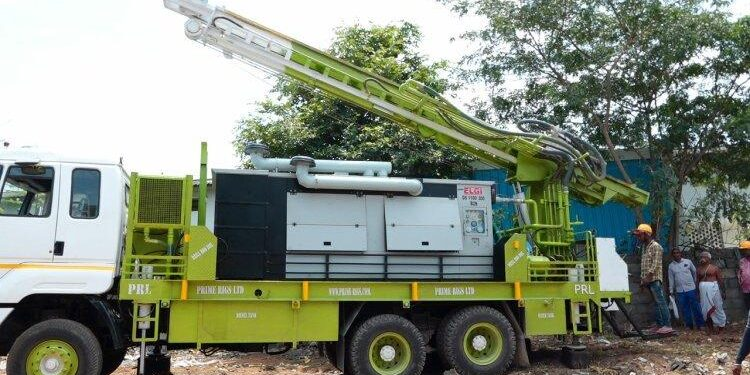
Construction sites are rarely uniform. Some projects may provide spacious working areas, while others may involve restricted access, uneven terrain, or multiple drilling locations. Equipment mobility can therefore have a direct influence on how efficiently a crew moves between work areas. Truck-mounted, tractor-mounted, crawler, skid-mounted, and portable configurations can serve different operational needs.
A mobile machine may be particularly useful when drilling locations change frequently or when equipment must be transported between sites. For water-related applications and projects where access is limited, a portable drilling rig for water well work can provide greater flexibility by allowing drilling equipment to be positioned closer to the required location. The appropriate configuration depends on factors such as terrain, access, drilling depth, and the scale of the operation.
The Role of Tooling in Drilling Efficiency
The drilling rig itself is only one part of the complete system. Bits, hammers, drill pipes, mud pumps, compressors, and other accessories all contribute to performance. If one component is poorly matched to the drilling application, the entire operation can become less efficient. For example, the selection of a drill bit should reflect the formation being penetrated. Hard rock may require different tooling from softer soil or fractured formations.
Similarly, percussion drilling requires coordination between the hammer, bit, power source, and rig. Using compatible components can support smoother drilling and help control wear. It also allows operators to adapt equipment to changing ground conditions instead of relying on one configuration throughout an entire project.
Considering Operating Costs Beyond the Purchase Price
The initial purchase price is only one part of the overall cost of drilling equipment. Fuel consumption, maintenance, transportation, tooling replacement, operator requirements, and downtime can all influence the long-term cost of a machine.
Contractors should therefore evaluate equipment based on total operating requirements. A machine with an attractive purchase price may become more expensive if it consumes excessive fuel or requires frequent repairs. Conversely, equipment designed around practical site requirements may support more predictable operating costs.
Planning Equipment Around the Complete Project
Drilling should not be viewed as an isolated construction activity. Its progress can influence excavation, foundation work, installation, material handling, and other stages of a project. Delays during drilling can create a knock-on effect across the wider schedule.
For this reason, contractors should consider how the drilling machine will arrive at the site, how quickly it can be positioned, what supporting equipment it requires, and how materials and drilling waste will be managed. Planning these factors in advance can reduce unnecessary movement and waiting time. It also allows the construction team to establish a more organised workflow before drilling begins.
Choosing Equipment With Long-Term Value
The most suitable drilling equipment is not necessarily the machine with the highest capacity or the largest engine. Its value comes from how effectively it meets the actual requirements of the work. Contractors should consider versatility, reliability, mobility, maintenance support, tooling compatibility, and expected workload when comparing options. Equipment that can adapt to different applications may also provide additional value for businesses handling varied projects.
Conclusion
Faster construction does not depend on drilling speed alone. It depends on selecting equipment that can work consistently with the ground conditions, project objectives, available access, and operational requirements. When machine capacity, drilling method, tooling, mobility, maintenance, and operator capability are considered together, contractors can create a more dependable drilling strategy and reduce avoidable delays.
For projects that require dependable equipment and practical machine selection, Prime Rigs focuses on drilling solutions developed around different site conditions and operational requirements. Its approach reflects the importance of combining suitable equipment with reliable performance and long-term usability. By considering these factors before work begins, contractors can make more informed equipment decisions and build drilling operations that support smoother, more efficient construction projects.