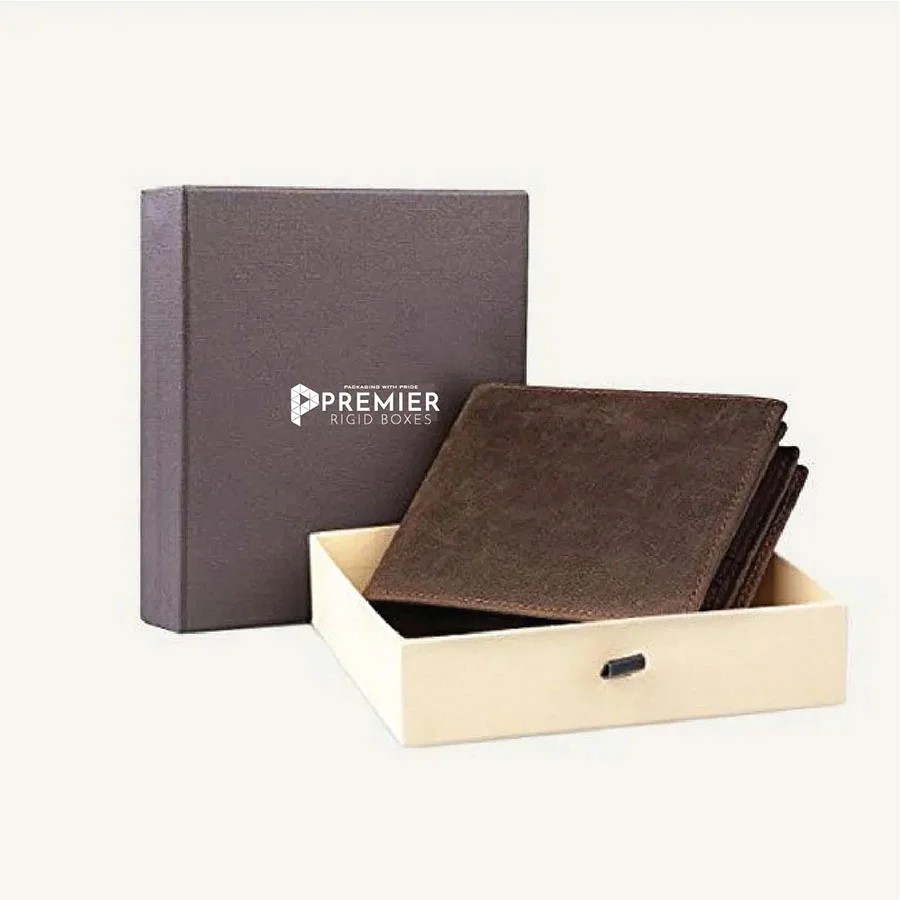
A wallet’s a wallet until you actually look at what it’s made from. Leather ages, scuffs, and reacts to its surroundings in ways that have almost nothing in common with how fabric behaves, yet much packaging is designed as if the two materials are interchangeable. Usually, that means one of them ends up fine, and the other takes on damage nobody notices until the box is already open.
Leather Isn’t as Tough as Its Reputation Suggests
People tend to think of leather as the sturdy option, and in some ways it is —, but it’s also weirdly sensitive once you get past the surface. Too much moisture can warp or cause mildew to grow. Too little, and it dries out, stiffens up, and eventually cracks right along the fold lines. Full-grain and unfinished leather, especially, will pick up scuffs and pressure lines from something as minor as rubbing against a box interior during shipping, or sitting compressed under other stock in storage for a few weeks.
Then there’s dye transfer, which catches many brands off guard. Darker or heavily saturated leather can bleed onto nearby lighter materials, or even onto itself, if two dyed surfaces are folded together long enough.
Fabric Wallets Fail Differently
Canvas, nylon, and woven textile fabrics generally shrug off humidity and surface scuffing better than leather does. But it’s not risk-free either. Stitched detail, embroidery, exposed seams all of that can snag on rough packaging or catch against other items during transit in a way leather simply doesn’t. Fabric also picks up lint and loose fibers more easily if the packaging isn’t sealed properly, and dyed fabric fades faster under light than most leather.
It’s lighter and more flexible, too, which cuts both ways. Less prone to structural cracking, sure, but more likely to lose its crisp folded shape if it sits compressed or gets packed wrong.
Where Do the Two Actually Diverge?
Moisture is the leather problem, mostly. Fabric can handle a wider humidity range without much consequence; leather needs packaging that avoids both extremes — too wet and too dry.
Surface protection leans leather’s way as well. Scuffing and pressure marks show up on leather in a way fabric mostly avoids, so a soft liner or tissue layer between the wallet and the box interior is doing real work there that it wouldn’t need to do for a fabric piece.
Snagging flips the concern onto fabric. Leather doesn’t catch on rough surfaces the way stitched fabric does, so a smooth, lint-free lining matters more once fabric’s in the mix.
And shape retention is its own separate issue. Leather mostly holds its fold, while fabric tends to need a little internal support to avoid going soft and shapeless in storage.
Leather vs. Fabric, Side by Side
| Factor | Leather Wallets | Fabric Wallets |
| Moisture sensitivity | High | Low–medium |
| Scuff/scratch risk | High | Low |
| Snagging risk | Low | Medium–high |
| Color transfer risk | Medium–high (dyed leather) | Low–medium |
| Shape retention need | Low — holds shape on its own | Medium — benefits from support |
| Recommended interior | Soft, acid-free liner | Smooth, lint-free liner |
Why Rigid Packaging Tends to Suit Leather Best
Higher-end or gifted leather wallets generally perform better in structured packaging that restricts movement almost entirely. Personalized wallet rigid packaging fits well here for a fairly simple reason: the rigid shell handles the compression and surface-contact issues that cause most scuffing, and a personalized touch (embossing, printed detail, an interior shaped to the exact wallet) adds the kind of presentation people expect when they’re buying leather goods, without undercutting the actual protection happening underneath.
Fabric doesn’t need rigid packaging nearly as badly, since it’s not prone to the same structural or surface failures. That said, rigid construction still helps it hold shape and keeps it from shifting around and snagging on whatever else is in the box.
A Few Practical Fixes Worth Making
- Acid-free tissue for leather, so prolonged contact doesn’t discolor the material over time
- Humidity-conscious packaging materials for leather skip fully sealed plastic, which traps moisture
- Smooth, non-textured lining for fabric wallets, cutting down on snagged stitching
- Keep dyed leather away from light-colored fabric or lining, since color transfer is a real risk over time
- A bit of internal support for fabric wallets, just enough to help them hold their folded shape in storage
FAQs
Can leather and fabric wallets share the same packaging design?
Not really, no. Leather needs more moisture and surface-contact attention, fabric needs smoother, snag-resistant lining; one shared design tends to shortchange whichever material it wasn’t built around.
Does rigid packaging matter more for leather than fabric?
Usually, yes. Leather gets a lot more out of rigid structure since it’s more prone to compression and scuff damage. Fabric’s more forgiving, though rigid packaging still helps it keep its shape.
Why does dyed leather need extra care in packaging?
Because the dye can migrate onto lighter materials nearby, or even onto itself if two dyed surfaces sit pressed together for a while, especially in a humid environment.
Is moisture actually a big deal for wallet packaging?
For leather, yes. Too much trapped moisture invites mildew or warping. Too little completely sealed, airtight packaging with zero humidity regulation, and the leather can dry out and crack instead.
Do fabric wallets even need special packaging, or is anything standard fine?
Standard packaging gets fabric a lot closer to fine than it does leather. Still, smooth lining to stop snagging and a little structural support to hold shape make a real difference over time, even for fabric.